

What is the production capacity of a packing machine per day?
Dec 16, 2025
Hey there! As a supplier of packing machines, one of the most common questions I get asked is, "What is the production capacity of a packing machine per day?" Well, let's dive into this topic and break it down.

First off, it's important to understand that the production capacity of a packing machine can vary widely depending on several factors. These factors include the type of packing machine, the product being packed, the packing speed of the machine, and the efficiency of the overall production line.
Let's start with the type of packing machine. There are all sorts of packing machines out there, from simple manual ones to high - tech automated systems. For example, a basic hand - operated packing machine might be able to pack only a few dozen items per day. These machines are often used for small - scale operations or for products that require a lot of manual handling. On the other hand, an automated Packing Machine can crank out thousands or even tens of thousands of packages in a single day.
Automated packing machines come in different forms such as vertical form - fill - seal machines, horizontal form - fill - seal machines, and rotary packing machines. Vertical form - fill - seal machines are great for packing products like powders, granules, and liquids. They can operate at high speeds, often packing hundreds of packages per minute. If we assume a machine runs for about 8 hours a day (with some short breaks for maintenance and adjustments), and it can pack 200 packages per minute, then in a day, it can produce 200 x 60 x 8 = 96,000 packages. That's a pretty impressive production capacity!
Horizontal form - fill - seal machines are commonly used for packing products like snacks, frozen foods, and medical devices. These machines also have high - speed capabilities. A well - designed horizontal form - fill - seal machine might be able to pack 100 to 300 packages per minute. Using a similar calculation as above, for a machine that packs 150 packages per minute and runs 8 hours a day, the daily production would be 150 x 60 x 8 = 72,000 packages.
Rotary packing machines are known for their accuracy and high - throughput. They are often used in the pharmaceutical and confectionery industries. A good rotary packing machine can pack 300 to 500 packages per minute. So, if it runs for 8 hours a day and packs 400 packages per minute, the daily output would be 400 x 60 x 8 = 192,000 packages.
The product being packed also plays a huge role in determining the production capacity. Products with irregular shapes or sizes can be more difficult to pack efficiently, which may slow down the packing machine. For instance, if you're packing oddly - shaped handicrafts, the machine might need to make more adjustments between each package, reducing the overall packing speed. On the contrary, standard - sized products like cans of soda or boxes of cereal are much easier to pack, allowing the machine to operate at its optimal speed.
The packing speed of the machine is directly related to its production capacity. Most packing machines have an adjustable speed setting. Operators can usually increase or decrease the speed based on the requirements of the production. However, it's not always a good idea to run the machine at its maximum speed all the time. Running at full tilt for long periods can lead to more wear and tear on the machine, increasing the likelihood of breakdowns and the need for maintenance. A balanced approach is often best, where the machine runs at a speed that maximizes production while still ensuring reliability.
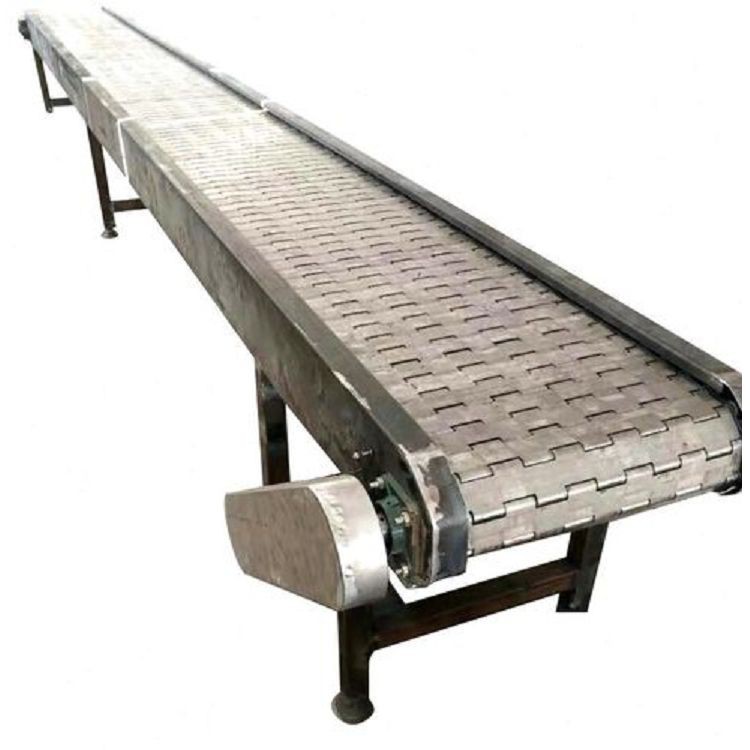
Another factor to consider is the efficiency of the overall production line. A packing machine doesn't work in isolation. It's part of a larger system that may include Belt Sorting Table and Chain Plate Sorting Table to feed products to the packing machine. If these sorting tables are slow or inefficient, they can bottleneck the production process and reduce the overall output of the packing machine. For example, if the sorting table can only supply 50 products per minute to the packing machine, but the packing machine is capable of packing 100 products per minute, then the production capacity is effectively limited to 50 products per minute.
In addition to these factors, the number of shifts per day also affects the production capacity. If a packing machine operates in a single 8 - hour shift, the production will obviously be less than if it runs in two or three shifts. In a 24 - hour operation with three 8 - hour shifts, the production capacity can be tripled, assuming the machine is in good working condition and there are enough operators.
Now, I know all these numbers and factors can be a bit overwhelming. But the bottom line is that when you're looking at the production capacity of a packing machine, you need to take a holistic view. Consider the type of machine, the product, the packing speed, the efficiency of the production line, and the number of shifts.
If you're in the market for a packing machine and want to find out how many packages it can produce per day for your specific product, we're here to help. We have a team of experts who can assess your requirements and recommend the right packing machine for you. Whether you need a small - scale machine for a startup or a high - end automated system for a large - scale production facility, we've got the solutions.
Don't hesitate to reach out if you have any questions or want to discuss a potential purchase. We're ready to have a detailed conversation with you about your packing needs and how we can help you boost your production capacity. Let's work together to find the perfect packing machine that meets your business goals.
References
- "Packaging Machinery Technology Handbook"
- Industry reports on packing machine production and efficiency