

What is the working principle of a screw air compressor?
Dec 01, 2025
Hey there! As a supplier of Screw Air Compressors, I'm super stoked to share with you the ins and outs of how these nifty machines work.
Let's start with the basics. A screw air compressor is a type of positive - displacement compressor. What does that mean? Well, it basically squeezes air into a smaller space to increase its pressure. It's like taking a big puff of air and packing it into a tiny box.
Inside a screw air compressor, there are two main components: the male and female rotors. These rotors are shaped like screws, hence the name. They're housed in a casing, and they work in a synchronized way. The male rotor usually has four or five lobes, while the female rotor has six or seven. When the compressor starts up, these rotors begin to rotate in opposite directions.
As the rotors turn, air gets sucked into the inlet of the compressor. This is the intake phase. The air fills the space between the lobes of the rotors. It's like when you open your mouth to take in a big breath of fresh air. The compressor creates a low - pressure area at the inlet, and air rushes in to fill that void.
Once the air is inside, the magic happens. As the rotors continue to rotate, the air is trapped between the lobes and the casing. The volume of the space where the air is trapped starts to decrease. This is the compression phase. It's similar to when you squeeze a sponge; as you apply pressure, the water (or in our case, air) gets pushed into a smaller area.
During compression, the pressure of the air increases significantly. The rotors are designed in such a way that they move the compressed air towards the outlet of the compressor. The compression ratio, which is the ratio of the final pressure to the initial pressure, can be quite high in screw air compressors. This allows them to deliver a large amount of compressed air at a relatively high pressure.
Now, let's talk about lubrication. In many screw air compressors, oil is used for lubrication, cooling, and sealing. The oil is injected into the compression chamber. It helps to reduce friction between the rotors, which in turn reduces wear and tear. It also absorbs the heat generated during the compression process, preventing the compressor from overheating. And it forms a seal between the rotors and the casing, ensuring that the compressed air doesn't leak out.
After the compression is complete, the compressed air and the oil mixture are discharged from the compressor. But we don't want oil in our compressed air for most applications. So, there's a separation process. The mixture goes through an oil separator, which separates the oil from the compressed air. The oil is then recirculated back into the compressor for reuse, while the clean compressed air is sent to where it's needed.
One of the great things about screw air compressors is their efficiency. They can operate continuously for long periods without much downtime. They're also relatively quiet compared to some other types of compressors, like the Piston Air Compressor. Piston air compressors use pistons to compress air, and they tend to make more noise because of the reciprocating motion of the pistons.
Another advantage is their ability to handle high - volume air demands. Whether you're running a small workshop or a large industrial plant, a screw air compressor can usually keep up with your needs. They can be adjusted to deliver different flow rates and pressures, depending on your specific requirements.
There are also Frequency Conversion Air Compressors, which are a type of screw air compressor. These compressors use variable frequency drives to control the speed of the motor. This means that they can adjust the amount of compressed air they produce based on the actual demand. If you don't need as much compressed air at a certain time, the compressor can slow down, saving energy. It's like having a smart compressor that can adapt to your needs.
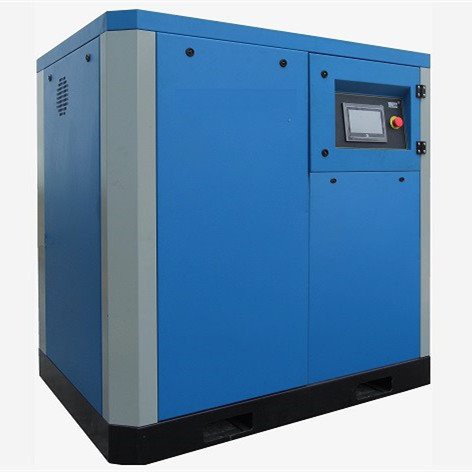

Screw air compressors are used in a wide range of industries. In manufacturing, they're used to power pneumatic tools, such as drills, wrenches, and spray guns. In the food and beverage industry, they're used for packaging and bottling processes. They're also used in the automotive industry for painting, sandblasting, and operating air - powered machinery.
If you're in the market for an Air Compressor, a screw air compressor is definitely worth considering. They offer a reliable and efficient solution for your compressed air needs. Whether you're a small business owner or a large - scale industrial operator, having a good quality screw air compressor can make a big difference in your operations.
So, if you're interested in learning more about our screw air compressors or if you think you might need one for your business, don't hesitate to reach out. We're here to answer all your questions and help you find the perfect compressor for your specific requirements. We can also provide you with detailed information about the features, performance, and pricing of our products.
In conclusion, screw air compressors are amazing machines. They work by using rotating screws to compress air, and they offer many benefits in terms of efficiency, reliability, and performance. Whether you're looking for a compressor for a small - scale application or a large - scale industrial operation, a screw air compressor is a great choice. So, get in touch with us today, and let's start a conversation about how we can meet your compressed air needs.
References:
- Compressed Air and Gas Handbook, Industrial Press Inc.
- Fundamentals of Compressed Air Systems, Compressed Air Challenge