


Frequency Conversion Air Compressor
JINXIANG ZHENGBIAO MACHINERY Co., Ltd. is a professional manufacturer of garlic deep processing machinery. Our main products include garlic sorting machines, garlic cutting machines, garlic peeling machines, garlic dryers, and garlic drying machines, garlic grading machines, garlic weighing machines, garlic packaging machines, and dozens of other garlic-specific mechanical products. Zhengbiao adapts to the development of the global garlic machinery industry and provides high-quality and low-price products to new and old customers.
Description
JINXIANG ZHENGBIAO MACHINERY Co., Ltd. is a professional manufacturer of garlic deep processing machinery. Our main products include garlic sorting machines, garlic cutting machines, garlic peeling machines, garlic dryers, and garlic drying machines, garlic grading machines, garlic weighing machines, garlic packaging machines, and dozens of other garlic-specific mechanical products. Zhengbiao adapts to the development of the global garlic machinery industry and provides high-quality and low-price products to new and old customers.
Our Advantages
Advanced Process Equipment
Our factory covers an area of 5,000 square meters and is equipped with professional lathes, milling machines, sawing machines, large shears, bending machines, argon arc welding machines, and other processing equipment to meet production needs.
High Market Share
Diversified crop processing machinery and deep processing machinery are welcomed by large vegetable wholesale markets, small farmers' markets, and agricultural product processing plants, with a market share of more than 70%.
Scientific Technical Support
Professional designers will design professional drawing machinery according to factory conditions, and rationalize the installation and placement of machinery to meet customers' customized needs.
Lifelong After-Sales Service
Full-time after-sales personnel provide services 24 hours a day. If any problems occur during the use of the device, users can contact us.
Compressors for Sale Display

Frequency Conversion Air Compressor
Unlike traditional air compressors that use fixed-speed motors and overheat frequently, our Frequency Conversion Air Compressor uses a variable-speed drive to adjust the motor speed based on the compressed air demand. It achieves up to 35% energy savings and reduces the operating noise level to 60 decibels or less.

Our Piston Air Compressor is suited for various industrial applications such as construction, manufacturing, automotive, and more. It provides a stable, continuous stream of compressed air with a high output pressure and flow rate, making it ideal for powering pneumatic equipment, tools, and machinery.

Our Screw Air Compressor comes with an advanced control panel that is user-friendly and easy to use. It allows businesses to enhance their productivity levels by providing a continuous and reliable air supply.
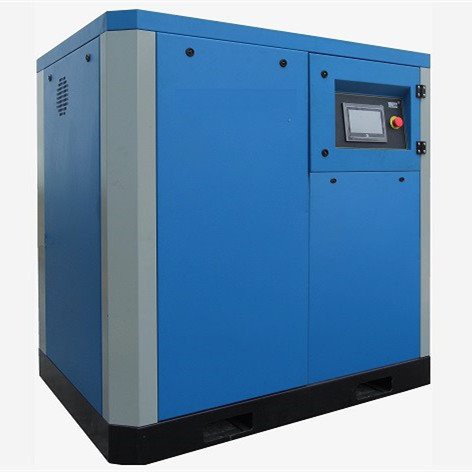
The cylinders of garlic rice packaging machines and other equipment all need high-pressure air with a pressure of 0.4-1.0MPa to operate, and the use of air compressors is to produce high-pressure air. Equipped with a powerful motor and high-quality components, it delivers reliable results.

An air compressor is a mechanical device that converts power from an external source, such as an electric motor or an internal combustion engine, into potential energy stored in compressed air. It is designed to provide power to any range of pneumatic tool varieties commonly used in garages, workshops and on building sites.
Common Types of Compressor

Reciprocating (Piston) Air Compressors
Reciprocating air compressors utilize pistons and cylinders to compress air efficiently. These types of compressors are commonly found in small workshops or used for portable applications. They come in single-stage and two-stage configurations, allowing for different levels of air compression. Additionally, reciprocating compressors can be oil-lubricated or oil-free, providing options based on specific needs. When choosing a reciprocating air compressor, consider factors such as power source, tank size, and CFM to ensure optimal performance.

Rotary Screw Air Compressors
Rotary screw air compressors utilize two interlocking rotors to efficiently compress air. These compressors are well-suited for industrial applications due to their continuous operation and high efficiency. For sensitive environments, oil-free rotary screw compressors are available. When selecting a rotary screw air compressor, consider factors such as horsepower, cubic feet per minute (CFM), and cooling requirements. These compressors provide reliable and consistent compressed air for a wide range of industries and applications.

Centrifugal Air Compressors
Centrifugal air compressors utilize a high-speed impeller to efficiently compress air, making them ideal for large industrial facilities. These compressors are known for their ability to deliver high flow rates and handle high-pressure applications. However, to ensure their optimal performance, regular maintenance and care are crucial. It is advisable to consult with experts to determine if a centrifugal compressor is the right choice for your specific needs.

Axial Air Compressors
Axial air compressors, commonly used in aircraft engines and gas turbines, rely on rotating blades to compress air. These compressors offer high flow rates and low-pressure ratios, making them suitable for power generation and petrochemical industries. When considering an axial compressor, it is essential to consult experts to determine its suitability for your specific needs. By understanding the different types of air compressors available, such as positive displacement and dynamic compressors, you can choose the right one for your industry.
Benefits of Compressor
Air Compressors are Safe and Convenient
Traditionally, electric-powered tools were used to perform a vast range of domestic and industrial chores. However, we realized that air tools were much more efficient. The air compressor supplies the compacted air to the tools that perform various functions. This way, the need for a heavy internal motor was eliminated, thereby making tools much more convenient and safe. Also, the tool design is compact and lighter, allowing the operators to use instruments for longer without experiencing fatigue.
Air Compressor Operates Quietly
The air compressor deals with massive airflow, yet works silently. So much so that, you can be in the compressor room and still talk and listen to others. You won't need to yell over the noise. The noise insulation and effective lubrication are the reasons that air compressors are silent.
It Increases Productivity
The air compressor improves productivity by dependably supplying clean and stable air to the appropriate pressure. The controls of the air compressor system can be managed to increase its efficiency, which eventually raises production efficiency. Also, it is simpler to replace the conventional tools with the air compressor as it is easy to set up and use. Complex operations can be completed quickly with the power and versatility of air compressors, too.
Air Compressor Conserves Energy
Compared to traditional tools, air compressors consume way less electricity. Also, they can be effectively controlled to consume less energy and cut costs. For instance, the air compressor can be maintained well, which allows for reducing energy costs and preventing breakdowns. This makes them economical. Furthermore, you can turn off the compressor when not in use to reduce the electricity bill.
It Requires Low Maintenance
The best part about air compressors is that they need low upkeep. Unlike electric-powered tools, they don't have many moving parts that can cause frequent problems. Also, the use of electric-powered tools is limited. For instance, you cannot use them in the presence of water. But there's no such risk with the air compressor. Moreover, the operator won't have to worry about getting electric shock anymore using air tools. Additionally, the air compressor can work in locations where other forms of energy are restricted due to explosion and fire hazards. It can even function at high temperatures.
Application of Compressor


Automobile Manufacturing
Automakers use compressed air systems to build critical components, assemble and move heavy objects, fasten parts in place and even apply glossy finishes. Air compressors are essential in keeping millions of vehicles on the road. They play a significant role in aftermarket operations like repair shops, body shops, collision centers, tire sales outlets and the like.
Agriculture
Air compressors power different kinds of hand tools in the typical agricultural enterprise, from paint sprayers to staplers to nail guns. They inflate tires on personal automobiles, tractors, ATVs, plows, harvesters, and more. They help apply pesticides, control milking robots and move grain or other materials to silos or other storage areas. And they pump compressed air through wastewater to help break down animal waste.
Food and Beverage
You'll see air compressors in all parts of the industry, from microbreweries to food processing facilities. Food and beverage manufacturers need clean and consistent compressed air for various production tasks, including packing and palletizing, bottling, filling equipment, and cooling and freezing products. Compressed air helps peel vegetables, fill pastries, improve productivity and cut waste.
General Manufacturing
Most general manufacturers today rely on compressed air to power their processes. In fact, the U.S. Department of Energy puts the number of U.S. manufacturers using compressed air at 70%. Air compressors operate a wide range of air tools on production lines: They drive cutting and welding equipment. They blow mold gas tanks and plastic bottles and eject pieces from production molds. They drive screws and turn nuts and adjust roller and feed machinery. They power positioners, clamps, stamping machines, air chucks and air knives, enabling sandblasting and metal finishing. They operate automated machinery and monitor production. In addition, pneumatic devices drive finishing and packaging operation
Mining
Mining operations use compressed air to operate pneumatic tools of all sorts. Plus, it's used for extraction and delivery, and it drives material conveyors, drilling and blasting equipment and piling devices. And most importantly, air compressors provide clean air to miners, so failure is not an option.
Oil and Gas
Because oil and gas environments are both hazardous and harsh, rugged air compressors play an essential role in onshore and offshore applications. They are used in all stages of the industry, including exploration, transportation, processing and refining and distribution. Both oil-free and oil-lubricated units play an important role, serving as backup, trim and point-of-use air. Compressed air systems are involved in vapor recovery, fuel gas and wellhead boosting and landfill gas. And they maintain or increase gas flow into a pipeline system. In addition, compressors help take critical performance measurements on a well while fluids are still flowing from the reservoir.
Air compressors work by forcing air into a container and pressurizing it. Then, the air is forced through an opening in the tank, where pressure builds up. Think of it like an open balloon: the compressed air can be used as energy as it's released. They're powered by an engine that turns electrical energy into kinetic energy. It's similar to how a combustion engine works, using a crankshaft, piston, valve, head and a connecting rod. From there, the pressurized air can be used to power a variety of tools. Some of the more popular options are nailers, impact wrenches, sanders and paint sprayers. There are different types of air compressors and each one has a different specialty. Generally, the differences aren't too severe: it all boils down to the way a compressor handles air displacement.

Maintenance Tips for Air Compressor
It is highly-recommended that you read the user manual before you take any further steps to clean or change your air compressor parts. Some of the most common problems with an air compressor are easy to solve with the help of the user manual. You might be at an advantage if you read the user manual once before making a distress call about your air compressor not functioning properly. For instance, if there is an issue with one of the connections or inlets that you can't place a finger on. A mistake that is often committed by an operator is to tinker with things manually in the hope of fixing the problem. However, you should never try to fix anything on your air compressor without first reading through the user manual. Failure to follow this step could cost you down the line. If you purchased the compressor fairly recently, an improper adjustment could render the warranty null and void.
Air compressor systems have a series of processes that rely on one another to provide the desired performance. It comprises various components which must be maintained to ensure consistent proper functioning. It is considered best practice if you maintain a timely schedule for regular periodic inspections of your compressor to ensure that all its components are in optimal condition.
An air compressor that undergoes daily continuous use is bound to have loosened nuts and bolts over time. These fasteners are the pivotal points for the seamless functioning of the compressed air system. The machine vibrates while in use that results in loose nuts and bolts over a long period. Loose fasteners are not something that would support your air compressor for smooth-functioning. It is best if you manually check each fastener to see if they're loose. If you find any loose nuts and bolts tighten them with the help of a wrench, and you're good to go.
Air compressors functioning at full capacity require clean intake valves. As the compressor is in continuous use through weeks, dust particles and other air-bound elements get sucked into these valves. It is important to clean these valves regularly. This avoids problems caused due to clogged intake valves that result in lower performance. For example, pneumatic woodcutters and sanders will inevitably produce hard dust particles that can accumulate within an air vent pretty quickly. Intake valves can also become dirty in working environments with various air-bound particles. Regardless of the working environment, it is advisable to clean the intake valves at least once every year to ensure the purity of the outgoing air.
The air compressor assembly consists of various components of which the hoses are the most vulnerable. These hoses transfer the compressed air between the machine and a given endpoint. Hoses perform a paradoxical function of being strong and tight and yet loose and flexible. They hold a lot of responsibility and can show strain from time to time based on the requirement and uptime. It is a given to keep your hoses clean and in apt condition all the time to maintain a consistent flow of air pressure. You must ensure inspecting hoses on your compressed air system periodically so as to observe any wear and tear.
Compressed air moisture is an inevitable byproduct that accumulates inside the air receiver tank in the form of condensate. The moisture tank inside the air compressor is designed to suck the water out of the outgoing air. The presence of moisture results in compressed air output is dangerous as it may result in water damage. Moisture also degrades the quality of output of industrial applications that the compressed air system is being used for. You need to make sure that you drain the air receiver tanks properly and from time to time for ensuring optimal performance and avoiding any damage.
The filter in an air compressor traps a lot of junk particles throughout the usage cycles. Air filters are designed to have a heavy load of particles, but it eventually reaches their peak. To keep a clean filter is to ensure that your air compressor performance does not degrade over a period of time. It is a good practice to keep a consistent check over the air filters and change them annually or if sandstorm conditions occur before the annual change.
Oil-based air compressors need to be tended with care and the lubricant must be changed periodically. The oil needs to remain fresh and full to provide efficient functioning and maximal performance. The lubricant ensures smooth-functioning and saves on the cost of performance.
Oil-lubricated air compressors rely on oil mist that helps smooth functioning. The compressors disperse oil within the machine in tandem with the air. However, before final delivery, the oil gets extracted from the air with an oil separator. Over continuous use and delivery, the air can get contaminated with oil if the oil-separator starts malfunctioning. It is imperative that you regularly inspect and change if required the separator elements for an optimally performing air compressor.
Ultimate FAQ Guide to Compressor
Hot Tags: frequency conversion air compressor, China frequency conversion air compressor manufacturers, suppliers, factory, compressor guarantee, Piston Air Compressor, compressor wheels, compressor sewage treatment application, compressor environmental regulation application, compressor documentation


